Keiser M3i Exercise Bike Review 2024


Reviewed by TreadmillReviews.com
The Keiser M3i contradicts many of our “standards” for exercise bikes. In this review of the Keiser M3i Exercise Bike, I’ll get into why that’s not necessarily a bad thing.
The best treadmill reviews you can trust
The Keiser M3i contradicts many of our “standards” for exercise bikes. In this review of the Keiser M3i Exercise Bike, I’ll get into why that’s not necessarily a bad thing.
Updated: January 16, 2024
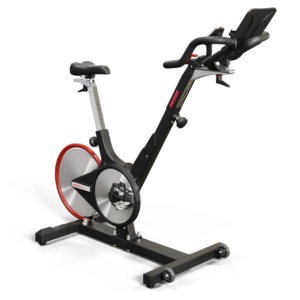
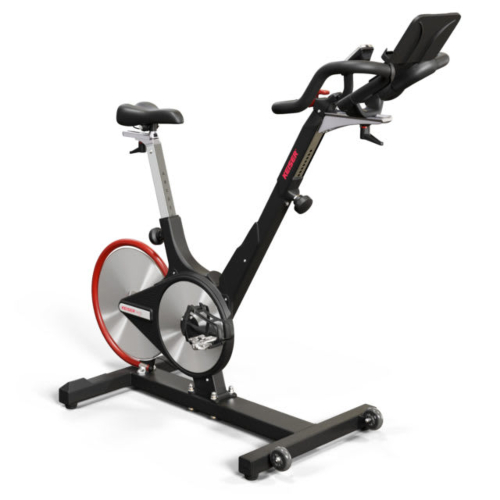
Keiser prides itself on innovation when it comes to creating superior exercise equipment. The Keiser M3i exercise bike is poised as the bleeding edge of indoor cycling technology. Whether the brand is right about this design, we will see for ourselves in this review of the Keise M3i Exercise Bike. Among their most creative exercise bike redesigns are the lightweight rear flywheel, magnetic resistance, and drive train. There are also solutions like the v-shaped frame and extended handlebars. Read on to learn about how these features could change (or not?) your indoor cycling experience.
The unique V-shaped frame of the Keiser M3i progressively increases the reach as you raise the seat and handles. Thus, it is more comfortable for taller users, because the bike has a larger range of adaptability that mimics the frame of road bikes of various sizes. This frame is covered with a 10-year warranty. The bike is designed to accommodate cyclists from 4’10” to 7’ tall. While we have not been able to verify this height range, we believe that the Keiser M3i can suitably accommodate exercisers well over 6 feet tall.
The Keiser M3i weighs 85 lbs. This low weight is partially due to its lightweight flywheel. The M3i exercise bike is, thus, easier to move around your space than similar bikes. It has two substantial stabilizers. The front stabilizer has two transport wheels, so you can roll the bike. It also has adjustable leveling feet to keep the bike steady even if your floors are not quite even.
The saddle on the Keiser M3i is sporty. Its narrow and firm design may be less comfortable for some users, but it can be swapped out for just about any road bike saddle you would like. The saddle adjusts horizontally and vertically. The saddle height can extend quite a lot. Keiser suggests that the M3i can fit riders from 4’10” to 7’0”.
The Keiser M3i’s handlebars are similar to butterfly handles but with an extended shape. This design gives you plenty of grip options, from the standard three cycling grips to well beyond. The texture is pretty grippy, so you don’t have to worry about sliding around later in your training session. The handlebar height can be adjusted, but they do not have the same variability as the seat post.
The hybrid pedals have SPD clips and toe cages. All athletic shoes should be supported with these pedals. These pedals can be replaced if you wish. The Q-factor is a bit wider than what is considered “ideal,” because the crank arms are curved to accommodate wider hips. This design should be more comfortable for women and users with larger frames.
The M3i was the first exercise bike to use magnetic resistance. It has 24 levels of magnetic resistance that are controlled by a lever on the handlebars. The lever is within easy reach while training, unlike other exercise bikes where you have to turn a knob located further down along the frame. Despite having fewer levels than other popular bikes, the M3i is a very challenging bike. The easiest levels are as light as necessary while the highest levels make it difficult to keep the pedals moving. Anyone from a beginner to a seasoned cyclist should find the M3i an effective workout.
The Keiser M3i is a relatively low-tech exercise bike. It does not have a touchscreen display. The M3i is a bike that can be used on its own or in conjunction with a smart device. One of the best benefits of this type of bike is its versatility. You don’t have to subscribe to any particular service if you don’t want to. You can use free or paid services to train however you want on your phone or tablet. It’s simple but provides a good alternative to other subscription-based exercise bikes.
The M3i console is a simple screen with all your most important metrics visible. It shows rpm, watts, calories, heart rate, total training time, gear (resistance level), and distance. The watts automatically switch back and forth with the calories. The console does not have any buttons! That may seem like a crazy choice on the manufacturer’s end, but it keeps things simple and low maintenance. The console is also certified by a third-party to be accurate.
The Bluetooth connectivity of the M3i console allows the bike to pair to several apps. The M3i is open API, so many apps are compatible, even those not affiliated with Keiser. The purpose of this connectivity is to allow your bike metrics to be sent to the training app. The M3i does not have Bluetooth speakers, audio, or automatic resistance adjustments.
If you want to use one of these apps, you may need your smartphone or tablet on hand. The media rack sits between the handlebars. It can be removed when not in use. It is big enough for small and large devices.
The water bottle holder is different from most other exercise bikes that use cages similar to those found on non-stationary bikes. The M3i’s water bottle holder is a groove located in the frame of the bike. It allows the bottle to rest along the front column of the frame. This design allows the M3i to accommodate a large range of water bottle sizes, but it also allows bottles to be knocked off more easily if you are not careful.
On the rear stabilizer, there are two pyramidal projections. These pads give you a place to stretch your calves in preparation for or recovery from a ride. It’s a minor detail that shows Keiser’s attentiveness to exercisers’ needs.
While I have not been able to test the Keiser M3i for myself, my research and consultation with a reviewer who has, has left me interested in trying it should I ever get the chance. I will certainly update this review if I do!
One of the most intriguing features on the M3i is the lighter flywheel. I have long thought that a heavier flywheel (at least, up to 40 lbs or so) was better. With the M3i, I have learned that that is not always the case. The exact flywheel weight is not disclosed, but it is speculated to weigh less than 10 lbs. This lighter weight does not particularly affect your training. The only differences are in the difficulty of starting to pedal and stopping the pedals. Because momentum increases as mass increases, a lighter flywheel makes it easier to start and stop the wheel. However, once it is going, the pedaling feel is very similar to other exercise bikes.
To create an optimum performance, Keiser designed the M3i’s drive train specifically for the lighter flywheel and magnetic resistance. This design enables the M3i to deliver a very effective workout without resorting to the techniques used by other brands. The M3i uses a belt drive, specifically a Poly-V belt. This durable design reduces maintenance and simplifies what Keiser believes other brands have complicated. While I personally like plenty of the bikes that Keiser considers inferior in design, the most important thing about an exercise bike is that it performs well. So if you aren’t concerned with these exact specifications, the takeaway is that the Keiser M3i performs well.
As previously mentioned, the M3i’s console does not have any buttons. As a result, it does not have any built-in training programs. However, its Bluetooth connectivity allows it to integrate with third-party apps. Keiser actually has a few compatible apps itself–Keiser M Series and M Series Instructor. The latter app is designed for group training and can be used by the instructor to monitor all of the bikes in the class. Some of the compatible apps include Zwift, Peloton (for iOS), Wahoo, Kinomap, and BKool. It’s a fun way to expand your training options on the M3i without the commitment of other bikes.
The Keiser M3i Exercise Bike is a unique indoor cycle. It has a premium build with features and designs not found on competitors. It does not require a subscription to use but can be paired with a variety of popular cycling apps. The M3i has a lightweight flywheel but still promises smooth and challenging training for users of all ability levels. The Keiser M3i is a studio-grade product that you can bring home for miles and miles of training.